How to Flush a Water Heater: Clean Water, Longer Machine Life
Flushing water heater steps explained: drain sediment, keep water clean, hold a steady temperature, and extend the working life of your unit.

Contents
- What Is Flushing a Water Heater?
- Why Flushing a Water Heater Matters
- What Happens If a Water Heater Is Never Flushed
- When Is the Right Time to Flush
- Preparation Before Flushing
- Basic Steps for Flushing a Water Heater
- Things to Watch For During Flushing
- Flushing Storage and Instant Water Heaters Differently
- How Flushing Extends the Life of a Water Heater
- Flushing and Household Water Quality
- When to Call a Technician
- Simple Maintenance for the Best Results
Water heaters work every day, often without much thought. As long as hot water keeps flowing, most people assume the unit needs no special attention. Yet inside the tank, minerals, fine sand, and rust particles slowly settle. Over time, this buildup affects both water quality and machine performance. Regular flushing is one of the most effective ways to keep the unit working well.
Flushing a water heater is not just an optional extra. It is an important step for keeping water clean and extending the life of the unit. With the right understanding, the process can be done safely and makes a real difference to efficiency.
What Is Flushing a Water Heater?
Flushing a water heater means draining and rinsing the storage tank to remove sediment that has settled at the bottom. This sediment comes from minerals naturally present in water, especially in areas with hard water or high iron content.
As water is heated again and again, minerals drop out and form a layer at the bottom of the tank and around the heating element. If this layer is not cleaned out, it keeps building up and reduces heating efficiency.
Why Flushing a Water Heater Matters
Flushing plays a major role in keeping hot water clean. Sediment left in the tank can be stirred up and carried out with the water flow, making it look cloudy or brownish.
Sediment also makes the heating element work harder. Mineral layers slow the transfer of heat, so heating takes longer and energy use rises. Over the long term, this wears down internal components faster.
What Happens If a Water Heater Is Never Flushed
A water heater that is never flushed tends to lose performance gradually. Hot water takes longer to arrive, the temperature becomes unstable, and the unit shuts off more often because its safety system activates.
Accumulated sediment also increases the risk of corrosion inside the tank. If left for too long, the damage can develop into leaks that are difficult to repair. At that stage, replacing the unit often costs far more than the routine maintenance that should have been done.
When Is the Right Time to Flush
Ideally, a water heater should be flushed every 6 to 12 months, depending on water quality and how often it is used. In areas with high mineral content, maintenance should be carried out more often.
Signs that a water heater needs flushing include hot water that looks cloudy, a rumbling sound during heating, or heating times that feel longer than usual. These symptoms indicate that sediment is already affecting performance.
Preparation Before Flushing
Before starting, several preparations are needed to make the process safe. Make sure the water heater is switched off and disconnected from the electricity or gas supply.
Let the water in the tank cool down to avoid the risk of scalding. Prepare a hose and a bucket, and make sure the drain area is safe and will not cause excessive pooling.
Basic Steps for Flushing a Water Heater
The process starts by switching off the electricity or gas supply and closing the cold water inlet to the tank. Then open a hot water tap to release the pressure inside the system.
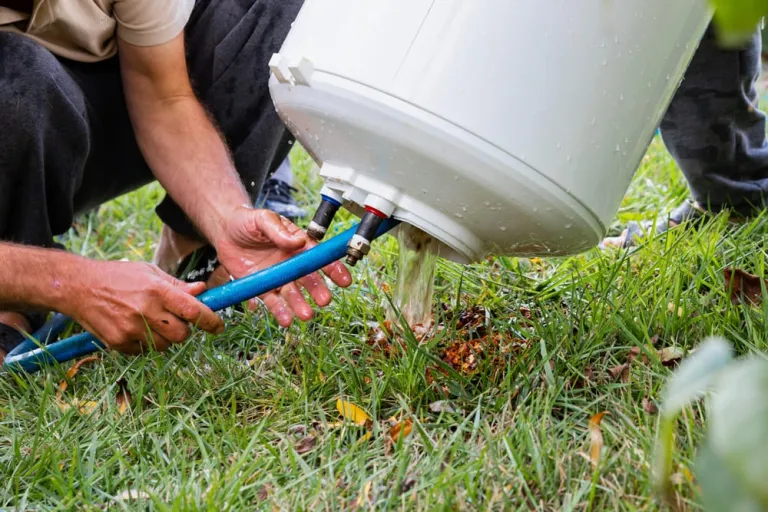
Connect a hose to the drain valve, which is usually located near the bottom of the tank. Point the end of the hose to a drain or another safe area. Open the drain valve slowly and let the water and sediment flow out until the water looks clearer.
For better results, briefly reopen the cold water inlet so that clean water stirs up and pushes remaining sediment out of the tank. Repeat this until the water coming out is genuinely clean.
Things to Watch For During Flushing
While flushing, pay attention to the color and texture of the outflow. Water that is brown, cloudy, or mixed with sand indicates a considerable amount of sediment.
If the drain valve is hard to open or the water flow is stuck, do not force it. Parts that have not been used for a long time can be brittle. In this situation, it is better to ask a technician for help to avoid further damage.
Flushing Storage and Instant Water Heaters Differently
Flushing is most common for storage water heaters because they have a tank that holds water. In this type, sediment tends to settle at the bottom of the tank.
Instant water heaters do not have a large tank, but they still need regular cleaning of the filter and water flow path. Although the process differs, the maintenance principle is the same: keep the water path clean so heating performance stays stable.
How Flushing Extends the Life of a Water Heater
With regular flushing, the heating element works more efficiently because sediment does not block it. Heating time becomes shorter and energy consumption is easier to control.
Flushing also reduces the risk of tank corrosion, because there is less sediment to trigger chemical reactions. The unit runs under lighter and more stable conditions, which helps it last longer.
Flushing and Household Water Quality
Flushing affects more than the machine. It also affects the quality of the water used every day. Clean hot water is more pleasant for bathing, washing, and other household needs.
This maintenance also helps keep pipes and bathroom fixtures free from mineral stains, which are hard to remove if left to build up.
When to Call a Technician
If the water is still cloudy or has an unpleasant smell after flushing, there may be another problem, such as a depleted anode rod or severe tank corrosion. In these cases, a more thorough inspection is needed.
It is also advisable to contact a technician if the water heater is quite old and has never had any maintenance. A complete inspection helps determine whether further maintenance will still be effective.
Simple Maintenance for the Best Results
Flushing a water heater is a simple step with significant benefits. With regular maintenance, hot water stays clean, the unit works more efficiently, and the risk of damage can be minimized.
Flushing on a regular schedule helps users stay comfortable while avoiding major repair costs in the future. A well-maintained water heater not only lasts longer but is also safer and more economical to use every day.