ISO 6935 Explained: The Standard Behind Rebar Quality
The ISO 6935 standard sets global benchmarks for rebar strength, ductility and chemical limits that keep concrete buildings safe, explained plainly.

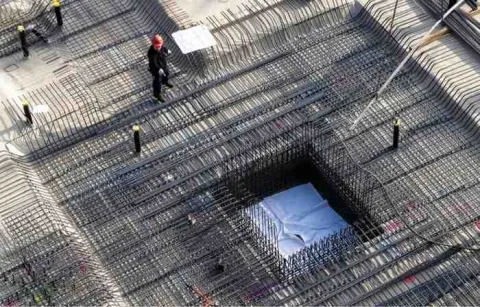
Amid the roar of cranes over Jakarta and the constant traffic of material trucks on the city's outskirts, a quiet component does its work inside the concrete. It stays invisible once a skyscraper stands complete, yet it often decides the difference between safety and disaster. That component is reinforcing steel, known in Indonesia as besi beton and in English as rebar. Not all steel is equal, though. Behind the strength of long-span bridges and apartment towers of dozens of floors lies a technical benchmark that sets the global standard for quality: ISO 6935. This international standard is more than a set of numbers on a certificate. It is a safety commitment built on the consensus of metallurgists worldwide.
In simple terms, ISO 6935 is a standard published by the International Organization for Standardization (ISO) specifically for reinforcing steel bars. It serves as a blueprint covering the physical and chemical properties of the steel that will be embedded in concrete. The standard has two key parts that rarely draw public attention but are part of everyday work for civil engineers. Part one, ISO 6935-1, covers plain bars (plain bars), while part two, ISO 6935-2, covers ribbed bars (ribbed bars). The difference is not just surface texture. It lies in how each bar grips the concrete, so the structure does not crack when shaken by an earthquake or loaded with thousands of tons of material.
For Ir. Hendra Gunawan, a senior structural engineer with more than three decades of work on strategic infrastructure projects across Southeast Asia, ISO 6935 draws a firm line between professionalism and negligence. In a discussion about construction safety, Hendra explained that the standard governs three core pillars of steel strength: yield strength (the point at which steel begins to deform permanently), tensile strength (the maximum stress steel can withstand when pulled), and elongation (the ability to stretch). Hendra noted that many people assume good steel is hard steel. According to ISO 6935, however, steel that is too hard is dangerous because it is brittle and breaks easily. The standard pushes manufacturers to produce steel with high ductility, meaning it must bend and stretch before it finally snaps. This property gives building occupants time to evacuate during an earthquake, because the building will not collapse instantly.
ISO 6935 matters even more in Indonesia when it is read alongside the Indonesian National Standard (Standar Nasional Indonesia, or SNI). In the field, the SNI 2052:2017 mark is the main legal requirement. Steel industry players understand, however, that the spirit of SNI draws heavily on parameters set in ISO 6935. Budi Santoso, a project manager at one of Indonesia's leading state-owned enterprise contractors, shared this view. Budi described the harsh reality on site, where the construction market is still often infiltrated by "besi banci" (literally "sissy iron"), a trade term for rebar whose diameter is reduced by a few millimeters below the standard or whose chemical composition fails to meet requirements. This is where international references such as ISO become a tool for contractors to reject substandard material. Budi stressed that when a project specifies ISO 6935, the margin for error becomes very thin. A bar labeled 16 millimeters must be precise within the permitted tolerance and cannot fall short by even a fraction, because ISO 6935 sets strict tolerances for weight and dimensions to protect structural integrity.
Going deeper into the steelmaking process, ISO 6935 also sets chemical requirements that end consumers rarely understand. Dr. Sarah Wijaya, a materials and metallurgy researcher with a German education who now consults for several national steel mills, explained that ISO 6935 limits specific elements, including phosphorus, sulfur and nitrogen. Sarah said that when these elements exceed their limits, steel can suffer from a phenomenon called cold short, in which it becomes brittle at low temperatures or when bent on site. The standard also specifies the carbon equivalent (CE) value to ensure weldability, meaning the steel can be welded reliably. In modern construction, where many bars must be joined by welding, compliance with ISO 6935's chemical limits is non-negotiable. If a mill breaks these rules to cut production costs, the risk of joint failure on site rises sharply.
The standard also matters across global supply chains. For steel producers that want to export, the SNI label alone is sometimes not enough to enter European or Middle Eastern markets. Certification of compliance with ISO 6935 works as a universal trade passport. This creates a healthy competitive environment in which mills are pushed to keep upgrading their rolling mill equipment and testing laboratories. Testing laboratories play a central role in this system. Under ISO guidance, every batch of rebar must undergo a tensile test, in which a steel sample is pulled by a massive machine until it breaks, recording its strength curve. That curve is the authentic proof of whether the bar deserves the ISO 6935 label or is simply useless metal.
The biggest challenge in applying this standard, however, is not the technology. It is oversight and integrity. In the retail building materials market, household consumers are often unaware of these technical specifications. They buy rebar based on the lowest price, without realizing that the savings are often paid for with lower quality that violates ISO standards. The Indonesian Iron and Steel Industry Association (IISIA) has repeatedly called for education on quality standards such as ISO 6935 and SNI to reach small contractors and homeowners. Earthquakes do not distinguish between a skyscraper overseen by foreign consultants and a simple family home. Both obey the same laws of physics, and both need the protection of standardized, high-quality steel.
The story of ISO 6935 is ultimately not just about metal and complex technical figures. It is about the moral responsibility of the construction industry for public safety. Every ribbed bar produced in compliance with ISO 6935-2 carries a promise of safety. When an engineer calculates structural loads, they place their trust in the consistency of quality guaranteed by that standard. If the standard is broken, the entire intricate mathematical calculation becomes meaningless, and the building becomes a stack of cards waiting to collapse.
Looking ahead, as architectural designs grow more complex and the threat of natural disasters increases with climate change, standards like ISO 6935 will become even more central. Advances in steel technology, such as ultra-high strength steel, will keep developing, but the foundations of testing and specification will remain rooted in the principles ISO has established. For contractors, engineers and steel producers, understanding and complying with ISO 6935 is not a regulatory burden. It is an investment in reputation and safety. As Ir. Hendra Gunawan put it to close his discussion, concrete may crack and paint may peel, but the steel backbone hidden inside must stand firm, and ISO 6935 is the genetic code that ensures that backbone never breaks.