Who Needs Bypass Surgery for Coronary Heart Disease?
Learn which patients with coronary heart disease need coronary bypass surgery, when angioplasty is a safer option, and what doctors assess first.

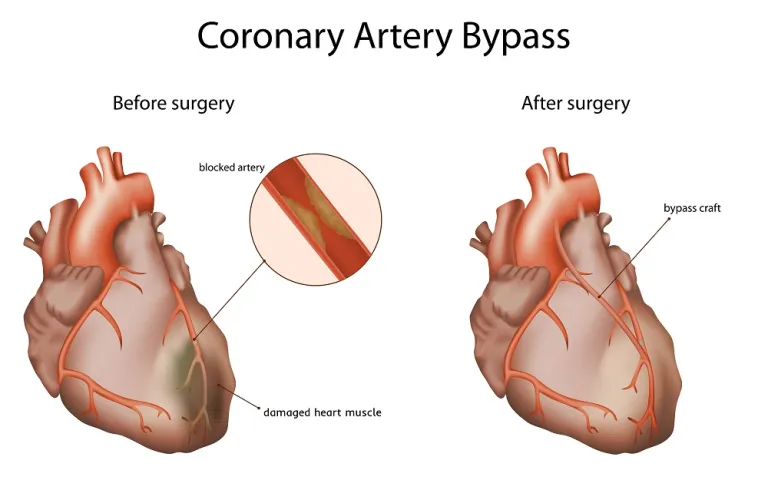
Coronary heart disease can be treated in several ways, and bypass surgery is one of them. The procedure restores oxygen-rich blood flow to the heart. But can every patient with coronary heart disease undergo bypass surgery right away? Here is a closer look!
Bypass Surgery at a Glance
Before going further, it helps to understand what this procedure involves. In essence, the surgeon replaces a problematic coronary artery with a blood vessel taken from elsewhere in the body. The patient is under general anesthesia and unconscious during the operation.
The heart is temporarily stopped, and a heart-lung machine takes over the circulation of blood. Once the graft is complete, the surgeon restarts the heart. The breastbone is then closed with special wire that holds it together as it heals.
The incision is sewn shut so the body looks much as it did before. A breathing machine stays connected until the patient can breathe normally on their own. The patient is monitored in the intensive care unit (ICU), where doctors track vital signs to see how the bypass surgery has gone.
Read also: 3 Functions of Cardiac Electrophysiology Examination
Patient Conditions That Call for Bypass Surgery
Every treatment decision a doctor makes involves careful consideration. Doctors first assess the patient's overall health. They need to determine whether the patient can safely undergo bypass surgery, since it carries notable risks and is considered a major operation.
In general, patients who are advised to have bypass surgery are those with narrowing in more than one coronary artery. This can eventually impair the function of the left ventricle. Surgery is also considered when a blockage occurs in a major coronary artery.
For patients with milder blockages, doctors usually recommend angioplasty or stent placement instead. These procedures are much safer and do not involve major surgery. The patient is given only local anesthesia, and a balloon is guided through a catheter to reach the blocked area.
When the blockage is severe, however, these procedures may not be possible, and the patient needs bypass surgery. This is especially true for patients who frequently experience severe chest pain and have fainted. The operation is well suited to emergency situations.
Read also: Heart Conditions Treatable with Vascular Intervention
These are some of the key points about who may need bypass surgery for heart disease. Before the procedure, patients must complete a series of tests. Doctors proceed only if the patient's condition allows it. Until then, make sure you have chosen a reputable heart hospital.